
RefluxStop™: A New Approach to Treating Acid Reflux
RefluxStop™ is an innovative medical device designed to treat acid reflux (also known as GORD) by restoring the body’s natural anatomy – without affecting the food passageway.
What is GORD?
Gastro-oesophageal reflux disease (GORD) is a condition where stomach acid repeatedly flows back up into the oesophagus (food pipe).
This can cause symptoms such as:
- Persistent heartburn
- Acid reflux
- Regurgitation
- Difficulty swallowing
Over time, ongoing reflux can lead to more serious conditions, including Barrett’s oesophagus and an increased risk of oesophageal cancer.
How is Acid Reflux Usually Treated?
Most people with GORD are treated with medication, particularly proton pump inhibitors (PPIs).
- PPIs reduce the amount of acid in the stomach
- They are effective at relieving symptoms
- However, they do not stop reflux itself – only reduce its acidity
- For some people, symptoms can persist despite medication.
In more severe cases, surgery may be considered. The most common surgical option is fundoplication, where part of the stomach is wrapped around the oesophagus to strengthen the valve between the stomach and oesophagus (the lower oesophageal sphincter, or LES).
While effective, this procedure can have side effects, including:
- Difficulty swallowing
- Inability to burp or vomit
- Bloating and discomfort
What is RefluxStop™?
RefluxStop™ is a non-active implant that is placed on the upper part of the stomach using laparoscopic (keyhole) surgery. Unlike traditional surgery, it:
- Does not wrap around or compress the oesophagus
- Aims to restore the natural anatomy of the body
- Helps prevent acid reflux by supporting the body’s natural anti-reflux barrier
Because it does not affect the food passageway, it may reduce the risk of some of the side effects associated with traditional surgical treatments.
How does it Work?
RefluxStop™ is designed to:
- Support the lower oesophageal sphincter (LES)
- Prevent the stomach from moving upwards
- Help maintain the natural barrier that stops reflux
By addressing the underlying cause of reflux, rather than just the symptoms, it offers a different approach to treatment.
Is RefluxStop™ Approved?
RefluxStop™ received CE mark approval in August 2018, based on clinical investigations assessing its:
- Safety
- Effectiveness
- Performance in patients
Is it Right for Everyone?
RefluxStop™ is not suitable for everyone. Treatment for reflux should always be based on an individual’s medical needs.
While new treatments like RefluxStop™ are promising, it’s important to:
- Speak to your GP or specialist if you are experiencing persistent reflux or heartburn
- Discuss your symptoms and treatment options
- Ask about further investigation if symptoms persist
- Seek professional medical advice before considering surgical options
- Understand the benefits and potential risks
Understanding the range of treatment options – from medication to newer approaches like RefluxStop™ – can help people make informed decisions about their health and seek the right care at the right time.
Where can I have RefluxStop™ Surgery?
RefluxStop™ is not yet widely available but we are watching with interest as we know that those with serious reflux problems would like to see what progress there is.
NHS
- St Mary’s London – Mr Ahmed Ahmed
- Chelsea & Westminster – Mr Naim Gomez & Mr James Brewer
Private
- Bupa Cromwell Hospital London – Mr Ahmed Ahmed
- Hospital of St John & St Elizabeth – Mr Naim Gomez
- Nuffield Health Wessex Hospital – Mr Fergus Noble
How RefluxStop™ Has Helped Sally
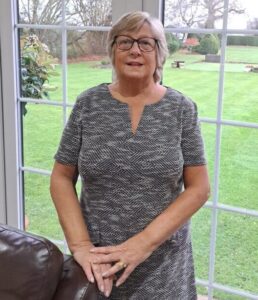
“After 22 years of coughing up bile and stomach acid coming through my nose after meals, an operation has fixed my chronic heartburn, and I am ready to enjoy my Christmas dinner”
Sally Ann Warner, 64, a retired NHS receptionist from Kings Lynn, says the best gift she ever received was an email from her 37-year-old son, Thomas, sent on Christmas Eve 2023, about a new operation called RefluxStop offered on the NHS which has cured her chronic reflux.
While on a beach holiday in Bulgaria with her husband Jeff, her mother and father in law and one of her two sons, Oliver, back in 2002, Sally Ann Warner, was relaxing after dinner as she ordered a Baileys with ice, happily chatting with her family.
“Little did I know that Baileys was the start of more than 22 years of not sleeping as acid reflux ruined my health, sleep and state of mind”, says Sally Ann.
“I am not a big drinker, and although I try not to overeat, I am like most people of my generation, brought up to finish everything on my plate and not waste food.
“Previously I had had the odd tummy cramps and indigestion before, but that night in Bulgaria, early in the morning, I woke up in shock. Acid was pouring out of my nose. I thought ‘Oh my God, what is this stuff?’ I was choking and I felt sick. It was shocking because it came on so suddenly. I kept thinking, this isn’t right.”
When she got back to the UK, Sally Ann went to see her GP who referred her for tests at the local hospital.
“I had a camera down my throat which was quite unpleasant but did confirm that I had chronic reflux – known as Gastroesophageal Reflux Disease or GORD. This is different to occasional reflux that comes and goes. It means that after every meal, large amounts of acid come up your throat, especially at night when you are lying down.
“I was prescribed the standard dose of a class of drugs which largely stop the acid being produced after eating. These are called PPIs – proton pump inhibitors. I was put on 40mg a day to start with.
“These helped – to start with. But soon things got worse. At work, people said they could hear me coming because I was always coughing. I started to sleep in a separate room to my husband because I couldn’t sleep, even propped up with four pillows.
“I began to cough up yellow bile, my teeth and jaw ached, my throat felt raw. I couldn’t eat out with the family. Jeff likes a curry, but I couldn’t eat anything spicy as it made my symptoms worse. I couldn’t drink alcohol, so nights out with my girlfriends meant sticking to one or two drinks with lots of water in between.
“There wasn’t an aspect of life that was unaffected. I felt constantly exhausted and pretty down to be honest.”
“I tried eating smaller meals early in the evening, I drank loads of water, but although that helped, it didn’t stop the acid. Three or four in the morning it would start again and I’d be awake and in pain. I also developed problems swallowing food and bread particularly would often get stuck in my throat which made me panic.”
Sally Ann’s GP was understanding but said there was nothing he could do to help her, other than increase her dosage of PPIs, or switch the medication to another PPI.
“I was on at least three types of PPI,” says Sally Ann. “I worried because I know it’s not good for you to take medication for years on end, that just mask your symptoms rather than treating the condition itself. I have read that long term use of PPIs can increase your risk of several serious diseases. I desperately wanted to come off it.
“I know about surgery to treat reflux: there’s one called fundoplication which is offered in our local hospital and involves wrapping your oesophagus around itself to tighten it and stop the acid coming up into your throat. I didn’t like the sound of that because you can’t burp or vomit either, so that sounds unpleasant.”
Luckily, Sally Ann’s elder son, Thomas, 37, was watching TV on Christmas Eve two years ago and saw an item about a new NHS operation being offered by St Mary’s Hospital in London to treat GORD. This is called RefluxStop and uses a minimally invasive way of stopping the acid rising to the throat through the oesophagus, without affecting its natural function or anatomy.
RefluxStop is a minimally invasive laparoscopic procedure that takes about 1-1.5 hours to perform, and it can be done as a day case.
It is an innovative device made of medical grade rounded solid silicone, expected to last a lifetime, that is implanted on the outside of the upper part of the stomach wall. The procedure aims to effectively stop the stomach contents from flowing back up the oesophagus by restoring and maintaining the natural anatomy, allowing the sphincter between the stomach and oesophagus to function properly.
Sally Ann read her son’s email, watched the TV piece online, and then spent the next few hours pondering how to reach the London-based NHS doctor featured on the news.
“As an NHS receptionist, you’d think I would be used to dealing with doctors, but it took a few hours for me to work up the courage to find his contact information online and send him an email.
“I ended up sending it on Boxing Day 2023. Then I sent it, and thought, ‘there’s no way he will get back to me, for a start it’s Christmas and I don’t live anywhere near London’.
Just one day later, Sally Ann received a lovely festive surprise: an email back from Consultant Surgeon Mr Ahmed Ahmed (correct), the St Mary’s surgeon who implants RefluxStop.
“I was amazed, and so impressed that he got straight back to me,” says Sally Ann. “He advised me to get a referral from my GP to his hospital in London.”
However, the referral itself took a year to come through.
“Unfortunately, my own GP struggled with the referral to an NHS hospital outside of my local area. This is unusual, but within the NHS rules to do this as it’s the patient’s decision where they are treated.
“Mr Ahmed and his team did all they could to help but unfortunately it took a year, until January 2025, to get the referral through.”
“Mr Ahmed and his team at St Mary’s were brilliant. I had a telephone triage appointment with them, and I also attended St Mary’s for a barium meal X Ray after which he told me that I am suitable for a RefluxStop.”
Sally Ann’s RefluxStop operation took place in July 2025. “Jeff and I went to London and stayed in a hotel the night before the operation. I went down to have surgery at about 11.30am, and I woke up about two hours later.
“I stayed the night in hospital and went home the next day. I was in a bit of pain from the 5 small incisions they made in my tummy to do the keyhole surgery, but I was expecting that – I was quite bloated as well, which is because they pump gas into you to inflate your stomach so they can see what they’re doing.
“But the bloating eased within hours – we managed an hour and a half train journey home the next day. All the pain stopped after a few days. I couldn’t eat solid food for a few days. But despite all of this – I knew straight away that my reflux had gone.
“It is the best thing I have ever done. It is brilliant. I have never had any reflux whatsoever since July. I have even had pickled onions with no problem! Curry, Chinese, I can eat anything I want. Baileys or other alcohol is not an issue, which is great. I am sleeping through the night for the first time in years. I feel fantastic.
“I have been able to lose a stone since my operation, because I think since I had to eat a mashed up diet after the op, I am more aware of what I am eating and to eat in sensible portions.
“I feel so excited for Christmas! I can’t wait to just enjoy Christmas dinner, the turkey and all the trimmings, then Christmas pudding and cheese to finish. I am so grateful to Mr Ahmed and his team at St Mary’s, I think they’re a Christmas miracle.”
Further Information
For more information, visit the manufacturers of RefluxStop™ – Impantica