Keeping Healthy – Knowing the Right Information
Living with acid reflux can, at times, be really challenging.
Here we share with you some suggestions, information and advice on ways you can change your diet or lifestyle that might help you feel better.
Lifestyle Changes that can Help
- Stop smoking - Cigarette smoke can relax muscles in the oesophagus, meaning acid can flow back up from the stomach more easily
- Avoid eating late at night - Try to stop eating at least three hours before bedtime so that your stomach is empty by the time you lay down to sleep
- Avoid bending over after meals - Let gravity work for you rather than against
- Do things that make you less stressed - Stress and anxiety can contribute to reflux. Manage stress and try to relax at mealtimes
- Sleep with your head higher than your feet - Try tilting the head of your bed by 10-20cm with a couple of books or a bed raiser, or try sleeping on a wedge pillow to elevate your head
- Avoid tight-fitting clothes around your tummy - Tight clothes can increase pressure in the abdomen and increase the likelihood of the stomach content refluxing upwards
- Chew your food more and sit upright to eat - Eating at a table rather than on a sofa can help this
- Take regular exercise - This will also help you to maintain a healthy weight, but avoid exercising straight after you have eaten
Changes to your Diet that can Help
- Follow a regular meal pattern and avoid skipping meals
- Avoid large meals. Large meals are more likely to cause the muscle that joins the oesophagus to the stomach (the lower oesophageal sphincter/ valve) to open. Small and regular meals are likely to reduce symptoms
- Maintain a healthy weight and follow a balanced diet. Being overweight and, in particular, carrying extra pounds around your middle, can increase pressure inside the belly, which can force the contents of the stomach (including acid) back up into the food pipe (your oesophagus). You can calculate your Body Mass Index (BMI), and work out your healthy range, using the NHS BMI calculator. For people who are overweight, losing between 5-10% of your body weight can often help improve reflux symptoms. You should aim to lose weight gradually (1-2lbs or 0.5-1kg each week) by following a balanced diet, alongside taking regular exercise
Diets to Try
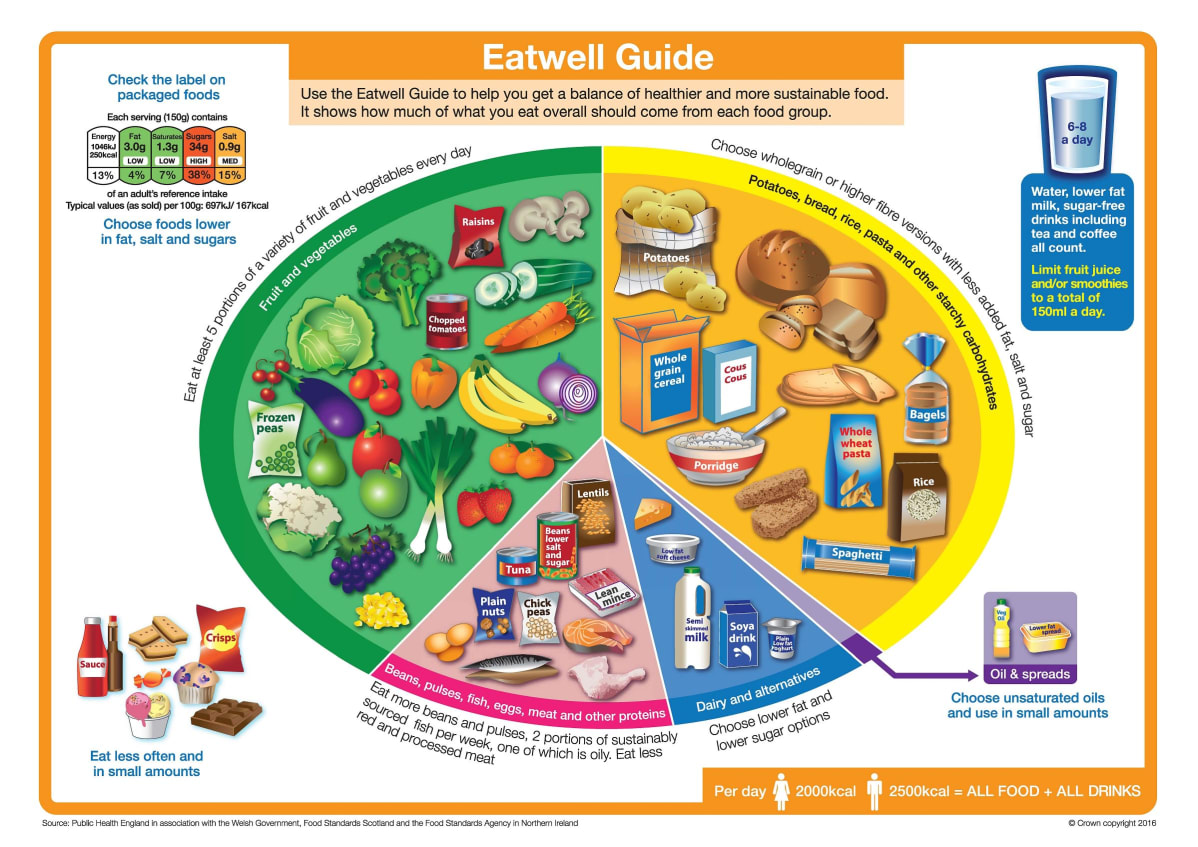
The NHS Eatwell Guide and resources from the British Dietetic Association, which you can read online or download and print, provide some additional advice on getting to a healthier weight, eating more fruit and veg and recommended portion sizes.
The Eatwell Guide (pictured) shows how much food should come from each food group to achieve a healthy, balanced diet. You do not need to achieve this balance with every meal, but you should try to get the balance right over a day or even a week.
If you’d like further help and advice with weight management, speak to your GP, who can refer you to an NHS dietician to help work out your own plan.
Foods that can Trigger Acid Reflux
Some types of food can trigger symptoms of acid reflux. It’s different foreveryone, but food and drinks that commonly trigger symptoms include:
- High-calorie meals or fatty foods - Eating high-fat meals can increase the frequency of reflux symptoms, but low-fat meals normally don’t. People also put on weight if they eat a lot of extra calories, and gaining weight itself is one of the main risk factors for developing reflux
- Spicy foods - Spicy foods can trigger heartburn in 88% of people with reflux. Try reducing how often you eat spicy food or choose milder spices to see if this improves your symptoms
- Acidic or citrus food - This includes tomatoes and tomato-based foods, onions and garlic, and citrus fruits such as oranges and lemons
- Coffee - Both caffeinated and decaffeinated coffee have been shown to make reflux symptoms worse. But neither caffeinated nor decaffeinated tea has the same effect. This would suggest that there is something in coffee, other than caffeine, that triggers these symptoms
- Fizzy drinks - High intakes of fizzy drinks have consistently been shown to worsen reflux symptoms. All fizzy drinks (including decaffeinated options and fizzy water) have been found to weaken the muscle barrier and increase acid reflux
- Alcohol - Alcohol relaxes the valve (the lower oesophageal sphincter) that helps to keep acid in the stomach, and can lead to an increase in reflux. Certain types of alcoholic drinks, such as beer (as it’s fizzy) and wine (due to acidity), can particularly cause a problem
Busting those Myths – Popular Questions
Does drinking fizzy drinks regularly increase reflux?
Yes, and the high sugar content in some fizzy drinks may contribute to weight gain too.
Would taking probiotics improve my reflux?
We’re not sure. Probiotics are live bacteria and yeasts that are usually added to yogurts or taken as food supplements. Limited evidence does suggest probiotics may be beneficial for reducing reflux, but we currently don’t have enough evidence to say which bacteria are beneficial, or in what doses.
Should I consider removing dairy, wheat or gluten from the diet to help with reflux?
No, there is no evidence that this improves reflux symptoms. However, if you decide to remove a food from your diet to see if it will help, do it for a maximum of two weeks. If there is no improvement in your symptoms, and the food is an important part of a balanced diet, it needs to be reintroduced to stop you missing out on nutrition.
Does eating acidic food make my heartburn or indigestion worse?
Possibly. Everyone is different but many people do find acidic food and drinks can increase reflux symptoms. Keeping a food and symptom diary for several weeks may help you identify triggers.
Could drinking ginger tea help with indigestion?
We’re not sure. Ginger has been shown to speed up stomach emptying, which, in theory, might help reduce pressure on the muscles that keep acid in the stomach so that they can work better. But it’s still not clear if this helps to manage acid reflux and, if so, how much people need to drink to make a difference.
Does chewing gum help relieve symptoms?
Chewing gum can stimulate saliva production and help neutralise stomach acid. You could try sugar-free gum about 30 minutes after meals to see if this works for you.
More Information
- Watch the NHS video giving up-to-date and accurate advice on diet and lifestyle for reflux
disease. You can find it here. - Look at the British Dietetic Association article: Constantly repeating yourself? Don’t let reflux
disease give you the run around. You can find it here. - The NHS has an online weight loss plan to support people who want to lose weight.
You can see it here.