Oesophageal & Stomach Cancer Care in England & Wales
NOGCA Patient & Public Summary – Sept 2025
Every year, the National Oesophago-Gastric Cancer Audit (NOGCA) reviews how people with oesophageal (food pipe) and stomach cancer are diagnosed and treated in England and Wales. This latest report looks at care between January 2022 and December 2023 and provides important insights into what’s working well, where improvements are needed, and what this means for patients and families.
Heartburn Cancer UK is proud to have contributed to this work, with our founder Mimi McCord involved in both the Clinical Reference Group and the Patient and Public Involvement panel, and our COO Fiona Labrooy taking part in the Patient and Public Involvement panel. By working alongside the NHS and other organisations, we aim to ensure that the voices of patients and carers remain central to how services develop.
Above all, this report carries a clear message: if you have persistent heartburn, reflux, difficulty swallowing, or other worrying symptoms, please don’t ignore them – speak to your GP. Early diagnosis can make a life-saving difference.
What the Report Tells Us
Between 2022 and 2023, over 20,500 people in England and Wales were diagnosed with oesophageal or stomach cancer. Around 7 in 10 had oesophageal cancer, while 3 in 10 were diagnosed with stomach cancer. These cancers are more common in men, and most people are diagnosed later in life, typically in their late 60s or early 70s. Sadly, around four in ten people in England were diagnosed at Stage 4, when the disease has already spread, making it much harder to treat.
Diagnosis often happens after a referral from a GP, but worryingly, about 1 in 5 people are diagnosed only after an emergency admission to hospital, when symptoms have become severe. This has not improved in recent years, and it highlights just how important it is to recognise and act on symptoms as early as possible.
Why Early Diagnosis Matters
The earlier these cancers are found, the more treatment options are available and the better the chance of a positive outcome. People diagnosed through an emergency admission are far more likely to have advanced cancer, where the focus may be on managing symptoms rather than cure. This is why it is so important to seek advice if you have ongoing indigestion, reflux, or swallowing problems, or if you are losing weight without trying.
Care and Treatment
Once diagnosed, patients should be supported by a Clinical Nurse Specialist (CNS), who plays a vital role in helping them understand their diagnosis, coordinating care, and providing emotional and practical support. The audit shows that while many patients do receive this support, it is not always consistently recorded, and access can vary — particularly for those diagnosed in emergency situations.
Treatment depends on the type and stage of cancer and on a person’s overall health. For some, curative treatment is possible, which may include surgery, chemotherapy, radiotherapy, or endoscopic therapies for very early cancers. For others, where the cancer is more advanced, the focus may be on palliative care — treatments that aim to control symptoms, improve quality of life, and support patients and their families.
Outcomes and Progress
The report provides encouraging news for those who are able to have surgery. Between 2021 and 2023, over 5,400 people underwent major surgery for oesophageal or stomach cancer. More than 95% of patients survived the first three months after surgery, and over 84% were alive one year later. These results show that surgery is generally safe and effective when cancers are caught early enough.
For people with advanced cancer, palliative chemotherapy was offered to more than half of patients in England. While outcomes varied, many were able to complete treatment courses, which can help to manage symptoms and, in some cases, extend life.
Looking Ahead
The report also highlights areas where more progress is needed, particularly in ensuring earlier diagnosis and reducing the time patients wait to start treatment – which currently averages around nine weeks.
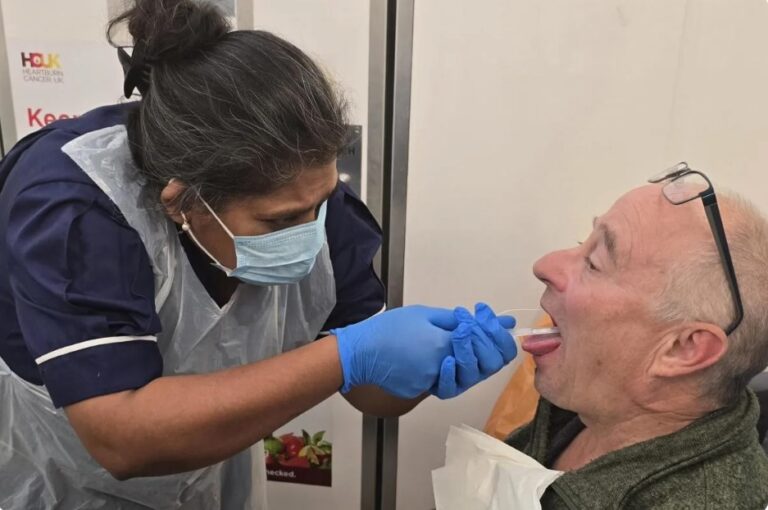
There is also hope on the horizon. New approaches, such as the capsule sponge test and breath tests, are being developed to help detect cancer and pre-cancerous conditions earlier, giving more people the chance of curative treatment. Better data collection and more consistent care will also be key to improving outcomes.
Our Message to You
This national review shows both the progress that has been made and the challenges that remain. It is a reminder that while treatments are improving and survival after surgery is encouraging, too many people are still diagnosed too late.
At Heartburn Cancer UK, we are committed to raising awareness of the signs and symptoms and encouraging people to seek help early. Persistent heartburn, reflux, difficulty swallowing, unexpected weight loss, or feeling full quickly are not symptoms to ignore. If something doesn’t feel right or normal for you then please, see your GP. Long term self-medicating with over the counter remedies is not the answer. Early action can save lives.