
Heartburn is common. But when it becomes persistent, it shouldn’t simply be dismissed.
For Mark Trask, heartburn had been part of his life for around 20 years.
Whenever his symptoms flared, he would reach for a Rennie and carry on with his day. Like many people, he had become accustomed to his heartburn and never imagined it could be a sign of something more serious.
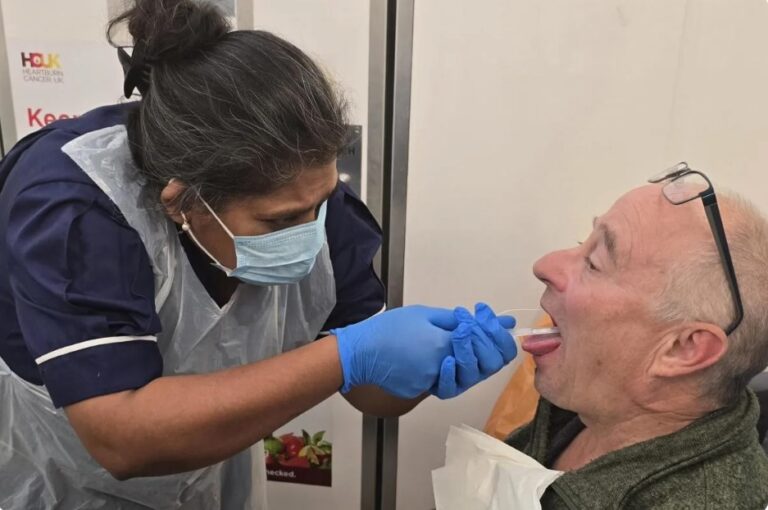
But eventually, a new test – the capsule sponge test – revealed that Mark had oesophageal cancer.
Mark shared his experience in The Telegraph in an article titled “For 20 years I dismissed my heartburn, then a new test revealed cancer”, published on 27 August 2026.
His story is a powerful reminder that while heartburn is extremely common and the vast majority of people who experience it will never develop cancer, persistent symptoms should not simply be accepted as something you have to live with.
Mark’s experience also highlights the potential of newer approaches to investigating people with persistent heartburn, including capsule sponge testing.
Heartburn is Common – But Persistent Heartburn Deserves Attention
As Dr Danielle Morris MBBS MSc MD FRCP, Consultant Gastroenterologist at East and North Herts NHS Teaching Trust, explains in Mark’s Telegraph article: “Heartburn is extremely common, and the vast majority of people who experience it will never develop cancer.”
That’s an important message.
Having heartburn does not mean that you have oesophageal cancer.
However, persistent or frequent heartburn can be a symptom of gastro-oesophageal reflux disease (GORD). Long-term reflux can damage the lining of the oesophagus and, in some people, contribute to the development of Barrett’s oesophagus.
Barrett’s oesophagus is not cancer, and most people with Barrett’s will never develop oesophageal cancer. However, some people with Barrett’s develop abnormal cell changes called dysplasia, which can increase the risk of cancer.
Identifying these conditions and changes means that appropriate treatment, monitoring or further investigation can be offered.
What Symptoms Should You Look Out For?
Oesophageal cancer can cause a number of symptoms. These symptoms can also be caused by many other conditions, so having one or more of them does not mean that you have cancer.
Symptoms can include:
- Persistent heartburn or acid reflux
- Difficulty swallowing (dysphagia)
- Food feeling as though it is sticking in your throat or chest
- Unexplained weight loss
- Persistent indigestion, stomach pain
- Feeling or being sick
- A persistent cough
- A hoarse voice
- an ongoing sore throat
- Pain in the throat or middle of the chest, particularly when swallowing
The NHS advises speaking to your GP if you have problems swallowing, have lost a noticeable amount of weight, or have heartburn most days for three weeks or more. It also recommends seeking advice if symptoms get worse or don’t feel normal for you.
These symptoms are common and can have many different causes. But if something doesn’t feel normal for you, don’t ignore it.
Dr Morris highlights two symptoms in particular: “If you are experiencing difficulty swallowing or persistent heartburn accompanied by unexplained weight loss, it is important to have these symptoms investigated.”
If you have difficulty swallowing, don’t ignore it. Speak to your GP and explain your symptoms.
Why Does Earlier Diagnosis Matter?
Oesophageal cancer can be difficult to diagnose early because some of its symptoms can be mistaken for common digestive problems.
That’s one reason why it is important to recognise changes in your usual symptoms and seek medical advice when problems persist.
Earlier diagnosis isn’t only about finding cancer.
Investigating persistent symptoms can identify conditions such as GORD and Barrett’s oesophagus, allowing people to receive appropriate treatment and, where necessary, monitoring.
For people with Barrett’s oesophagus, surveillance can help doctors identify changes that may require further investigation or treatment.
The NHS notes that if oesophageal cancer is found early, it is more likely to be treatable.
Capsule Sponge Testing: Another Way To Investigate The Oesophagus
One development in recent years has been the use of capsule sponge testing.
The EndoSign® capsule sponge test (also known as the pill on a string) involves swallowing a small capsule attached to a thin thread. Once the capsule reaches the stomach, it dissolves and releases a tiny sponge.
The sponge is then gently withdrawn, collecting cells from the lining of the oesophagus. These cells can be analysed for changes associated with conditions such as Barrett’s oesophagus.
The procedure takes around 10 minutes and does not require sedation.
For appropriate patients, capsule sponge testing can help identify people who may need further investigation with an endoscopy.
It is important to stress that capsule sponge testing does not replace endoscopy for everyone. An endoscopy may still be needed when a doctor considers it clinically appropriate, particularly where symptoms or test results require direct examination and biopsy.
Instead, capsule sponge testing can provide a less invasive way of investigating certain patients and help identify those who may benefit from further investigation.
NHS Experience Of Capsule Sponge Testing
At East and North Hertfordshire NHS Teaching Trust, capsule sponge testing has been used since 2020.
The service was initially introduced during the COVID-19 pandemic as part of a national pilot programme, helping to reduce pressure on endoscopy services. According to Dr Morris, the Trust has since embedded the service into its standard care pathway.
Having seen capsule sponge testing used in NHS care, Dr Morris describes benefits for both patients and the wider healthcare system.
“The procedure takes around 10 minutes, requires no sedation, and can often spare patients from undergoing a more invasive investigation.”
She explains that the test can help identify patients who need further investigation with endoscopy, as well as supporting the monitoring of people with Barrett’s oesophagus – “beyond improving the patient experience, it also enhances diagnosis.”
Dr Morris’s experience has led her to call for capsule sponge testing to be made more widely available across the NHS. “I believe it should be rolled out nationally across the NHS.”
This is Dr Morris’s professional view, based on her experience of using capsule sponge testing within NHS care.
Could Capsule Sponge Testing Help With Earlier Detection?
Capsule sponge testing is not suitable for everyone, and it is not a replacement for endoscopy when an endoscopy is clinically indicated.
However, it offers another way of investigating people who may be at risk of Barrett’s oesophagus and identifying those who may need further investigation.
For patients, a test that is quick, minimally invasive and does not require sedation may make investigation more acceptable.
For the NHS, capsule sponge testing also has the potential to help manage demand for endoscopy by helping identify people who are most likely to need further investigation.
Research and NHS implementation programmes continue to explore how capsule sponge testing can best be used within healthcare pathways.
Don’t Swallow Your Discomfort
Mark’s story is a powerful reminder of how easy it can be to normalise heartburn.
If you’ve experienced heartburn for years, you may simply reach for medication when it flares up and carry on with your day.
But persistent heartburn isn’t something you should simply have to live with.
Most people with heartburn will never develop oesophageal cancer. But persistent symptoms can indicate an underlying condition that needs attention.
If You Have Persistent Heartburn or Acid Reflux, Speak To Your GP
The NHS advises seeing your GP if you have heartburn most days that lasts for three weeks or more.
If you have difficulty swallowing, particularly if it is new or getting worse, seek medical advice promptly.
And if you have persistent heartburn alongside unexplained weight loss, make sure you discuss this with your GP.
You don’t need to panic. But you shouldn’t ignore persistent or changing symptoms either.
Recognising symptoms, investigating persistent problems and identifying conditions such as Barrett’s oesophagus earlier can all play a role in improving outcomes.
Don’t Swallow Your Discomfort. Get Persistent Heartburn Checked
At Heartburn Cancer UK, we want to see more people diagnosed earlier, more people surviving oesophageal cancer and fewer families experiencing the devastating impact of this disease.
Expert Insight
The expert comments from Dr Danielle Morris MBBS MSc MD FRCP, Consultant Gastroenterologist at East and North Herts NHS Teaching Trust, included in this article were originally published in The Telegraph as part of Mark Trask’s article, “For 20 years I dismissed my heartburn, then a new test revealed cancer”, published on 27 August 2026 at 12:31pm BST.
Dr Morris’s comments provide expert context on persistent heartburn, oesophageal cancer and the use of capsule sponge testing within NHS care. Her comments regarding the wider rollout of capsule sponge testing represent her professional opinion.