

An update from Fiona Labrooy, COO of Heartburn Cancer UK
One of the questions we are asked most often at Heartburn Cancer UK is, “What is actually happening to improve earlier diagnosis of Barrett’s oesophagus and oesophageal cancer?”
The encouraging news is that there has been significant progress over recent years. Research has moved beyond the laboratory and into real NHS services, innovative technologies are being evaluated, and community-based approaches are beginning to demonstrate how earlier diagnosis could become more accessible for people at risk.
At Heartburn Cancer UK, we have been proud to support and contribute to many of these developments. We work alongside patients, clinicians, researchers, NHS organisations and industry partners to ensure that patient voices help shape the future of earlier diagnosis.
While progress is being made, we would still challenge that it is not happening quickly enough. Too many people are still diagnosed with oesophageal cancer at a late stage, when treatment options are more limited. Earlier detection of Barrett’s oesophagus – the main precursor to oesophageal cancer – offers one of the greatest opportunities to improve outcomes.
Oesophageal adenocarcinoma is the most common type of oesophageal cancer in the UK. It usually develops in the lower part of the oesophagus and is often linked to long-term acid reflux and Barrett’s oesophagus. Unfortunately, it is frequently diagnosed at a late stage, when treatment options are more limited.
Here’s an overview of where things currently stand.
1. Why We Need a Better Way to Detect Barrett’s Oesophagus
Oesophageal adenocarcinoma is often diagnosed late, when treatment options are more limited.
Barrett’s oesophagus is the main precursor condition, but many people remain undiagnosed. Although most people with Barrett’s oesophagus will never develop cancer, identifying the condition allows appropriate monitoring and treatment where necessary, helping to detect changes at a much earlier and more treatable stage.
Current pathways rely heavily on endoscopy, which is invasive, resource intensive, and can be subject to long waiting lists. We believe there is a clear need for a more accessible, scalable approach to identifying people at risk. Unbelievably this was raised by the Chief Medical Officer Liam Donaldson back in 2006 and 20 years later we are still waiting for a test to be widely available.
2. What is Capsule Sponge Testing?
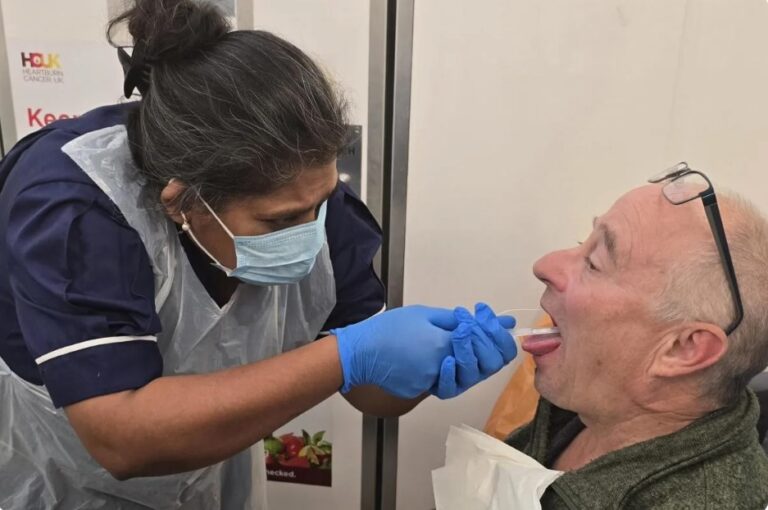
Capsule sponge testing is a minimally invasive alternative to endoscopy and could offer a more scalable approach to the detection of Barrett’s oesophagus:
- It can be delivered in community or primary care settings by trained healthcare professionals.
- The procedure takes only a few minutes and does not require sedation.
- It helps identify patients who may need further investigation while avoiding unnecessary endoscopies for others.
- The capsule sponge also has the potential to make surveillance for suitable patients with Barrett’s oesophagus more convenient, reducing reliance on repeated endoscopy.
3. What is PinPoint?
PinPoint is a blood test designed to help identify people who may be at higher risk of oesophageal adenocarcinoma. Early studies have produced encouraging results, although further real-world evidence is required before it could become part of routine NHS care.
We are supportive of this innovation because it would perform a different role within the diagnostic pathway. Rather than replacing capsule sponge testing, it has the potential to complement it by helping identify people who may benefit from further investigation.
4. The Evidence Is Growing
Multiple studies have demonstrated that capsule sponge testing is safe, acceptable to patients and effective at detecting Barrett’s oesophagus.
HCUK-supported research has shown very high patient acceptability, and research suggests the test can significantly increase detection of Barrett’s oesophagus compared with current practice.
At a time when endoscopy services remain under considerable pressure, technologies that safely identify people who genuinely need endoscopy, while avoiding unnecessary procedures for others, could benefit both patients and the NHS.
5. Momentum Is Building Across the NHS
NHS organisations and Cancer Alliances are running implementation projects and evaluations in real-world settings.
Community-based approaches are being explored through pharmacies, Community Diagnostic Centres and outreach services.
The National Institute for Health and Care Excellence (NICE) is currently undertaking a Health Technology Assessment to evaluate the clinical and cost effectiveness of capsule sponge testing. Guidance is expected during the first part of 2027 and is likely to play a major role in determining future NHS adoption.
The British Society of Gastroenterology (BSG) had planned to publish updated clinical guidance on capsule sponge testing. Unfortunately, publication has been delayed so that it aligns with the forthcoming NICE guidance. This delay is disappointing and means clinicians and Integrated Care Boards currently have less national guidance to support wider implementation than they otherwise might have had.
Progress is also being made across the UK:
- In Scotland, the capsule sponge is already being used for Barrett’s surveillance and, in some areas, for assessing people referred with reflux symptoms.
- Health Technology Wales has supported its use in Wales, and we hope to see this become increasingly evident over the coming months.
- In England, availability currently varies between regions, with some NHS services using the capsule sponge for Barrett’s surveillance, reflux referrals and case finding.
However, until updated national guidance is available, wider and more consistent adoption is likely to remain limited. Updated guidance is therefore vital.
6. Current NICE Guidance and the Opportunity for Earlier Detection
Current NICE suspected cancer referral guidance is primarily designed to identify people who may already have oesophageal cancer rather than proactively identify Barrett’s oesophagus before cancer develops.
As a result, referral pathways are largely focused on people aged 55 years and over with particular combinations of symptoms and risk factors, alongside urgent referral for symptoms such as difficulty swallowing regardless of age.
This means that many people living with long-term reflux – particularly younger individuals or those who do not meet current referral criteria – may never be investigated despite being at increased risk of Barrett’s oesophagus.
Earlier case-finding approaches, such as capsule sponge testing, have the potential to bridge this gap by identifying Barrett’s oesophagus before cancer develops.
7. Reaching People Missed by Current Pathways
A particularly important opportunity is finding people who:
- Self-manage persistent heartburn or reflux.
- Regularly buy over-the-counter medication.
- Have never been referred for investigation.
- Come from underserved or seldom-heard communities.
The NHS has been expanding the role of community outreach programmes and links with pharmacies in identifying people with possible cancer symptoms:
- The BEST4 (Heartburn Health) programme – the largest study of capsule sponge testing undertaken to date and represents the next major step in determining whether the technology could be introduced more widely across the NHS as a screening test. Involving thousands of participants who regularly take medication for heartburn, acid reflux or indigestion but have not previously undergone an endoscopy, it aims to determine whether capsule sponge testing could become an effective screening approach that saves lives compared with current care pathways. Participants are randomly allocated to receive a capsule sponge and researchers will then follow participants over time to determine whether screening with the capsule sponge identifies more cases of Barrett’s oesophagus and early oesophageal adenocarcinoma, and ultimately whether it can reduce deaths from oesophageal cancer.
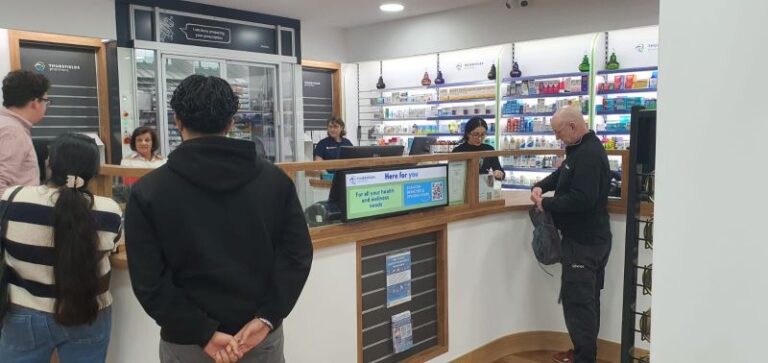
- The COMPASS project (Community Pharmacy Assessment for Barrett’s Oesophagus and Reflux Symptoms) – a 12-month NHS pilot that is testing whether community pharmacies can identify people at risk of Barrett’s oesophagus and early oesophageal adenocarcinoma before they would normally present through traditional NHS pathways. The idea behind COMPASS is simple: many people with persistent reflux or heartburn never tell their GP. Instead, they repeatedly buy over-the-counter medicines from pharmacies. Those people may never be investigated, despite some being at increased risk of Barrett’s oesophagus. Selected Boots and community pharmacies in a couple of locations will offer “Heartburn Health Checks” using the capsule sponge to identify Barrett’s oesophagus in people with persistent heartburn or reflux. Heartburn Cancer UK is a partner in this pilot. The tests may be done in the pharmacy or in a local community diagnostic centre (CDC).
Projects such as these are specifically exploring how to reach participants through community pharmacies and targeted outreach programmes.
There is also growing recognition that public awareness campaigns need to reach people where they are, rather than relying solely on healthcare settings. For example, Morrisons has partnered with the NHS to place cancer awareness messages on a range of own-brand bath and shower products, encouraging shoppers to recognise potential signs and symptoms of cancer through its “Know the Signs of Cancer” and “Be Body Aware” campaign. The campaign highlights a range of symptoms, including persistent heartburn, alongside other possible warning signs of cancer.
And Tesco has worked with Cancer Research UK to encourage customers with possible cancer symptoms to speak to trained in-store pharmacists. Heartburn Cancer UK welcomes initiatives such as this, which help raise awareness among people who may not otherwise seek health information.
8. What Needs to Happen Next?
Consistent National Guidance
- A clear, nationally supported pathway would help reduce variation in access.
- Clinicians and commissioners need confidence about who should be offered testing and how patients should progress through the pathway.
Investment in Community Delivery
- Pharmacies, primary care and Community Diagnostic Centres could all play an important role.
- Solutions need to be practical and integrated into existing services.
Public Awareness
- Millions of people live with chronic reflux, yet many do not realise it is associated with an increased risk of Barrett’s oesophagus and oesophageal cancer.
- Heartburn Cancer UK successfully campaigned for patient information leaflets supplied with reflux and heartburn medicines to include advice encouraging people with persistent heartburn for three weeks or more to seek medical advice. While this was an important step forward, we continue to believe these messages should also appear prominently on outer packaging, pharmacy shelving and point-of-sale information so people see them before purchasing medication.
- Greater public awareness of persistent reflux symptoms, together with better education and support for GPs and other healthcare professionals, remains essential.
Reducing Inequalities
- Future programmes must ensure that people who rarely engage with healthcare services are not left behind.
- Outreach-based models offer promising ways to improve access.
9. The Role of Heartburn Cancer UK
Supporting awareness of persistent heartburn and reflux symptoms through our website, social media channels and both national and regional campaigns. Over the past few years we have run focused and targeted campaigns across Portsmouth, Southampton, Weymouth, London, Manchester, Lincolnshire, Corby, Derby and Nottinghamshire, to name just a few.
- Championing earlier diagnosis and prevention.
- Contributing to the NICE Health Technology Assessment, the Health Technology Wales assessment, Project COMPASS (helping shape access to capsule sponge testing through pharmacies and Community Diagnostic Centres), Cytoprime 1 and 2, providing further essential evidence on capsule sponge testing, and Project DELTA, where we commissioned our first mobile unit during COVID to ensure the primary care element of the study could continue, allowing people to access the capsule sponge within the community rather than solely in hospitals. We have also carried out our own testing campaign using capsule sponge, targeting London Black Cab Drivers and the hospitality industry. We picked up twice the number of positive cases you would expect to see from people self-referring, resulting in a published paper.
- Working with researchers, clinicians, NHS organisations and industry partners to ensure patient voices shape future services.
- Advocating for equitable access to innovative technologies that have the potential to save lives.
- Continuing to challenge the pace of change. Simple, evidence-based technologies that have the potential to save lives should not take so long to become available, alongside wider investment in research, earlier diagnosis and improved treatments.
- Alongside all of this, we continue to provide trusted health information and support to patients, families and carers.
10. In Summary
Capsule sponge testing has now moved well beyond the research stage. Real-world NHS implementation is growing, the evidence base continues to strengthen and national evaluations are underway. Alongside developments such as PinPoint and studies including BEST4 and COMPASS, there is a genuine opportunity to transform how Barrett’s oesophagus and oesophageal cancer are detected.
However, progress remains slower than patients deserve. Updated national guidance, sustainable funding, greater public awareness and equitable access are all essential if these innovations are to benefit everyone who could need them.
Heartburn Cancer UK will continue working with patients, clinicians, researchers, NHS organisations and policy makers to ensure earlier diagnosis becomes the norm rather than the exception. We will also continue campaigning for better awareness of persistent heartburn and reflux, including clear messages on medicine packaging, pharmacy shelving and within primary care, so that more people understand when to seek advice.
Because when oesophageal cancer is detected earlier, more lives can be saved – and we believe the pace of progress needs to be faster.